Our material
With over 60 years of experience in the industry, we place great emphasis on offering our customers high‑quality and sustainable products. The plastic materials used in Nordiska Plast’s products are regularly tested by an external party to ensure quality and safety. All products intended to come into contact with food are, of course, food‑approved in accordance with current EU legislation and other stringent regulatory requirements.
All our products are therefore tested for bisphenols and are completely free from BPA (Bisphenol A).
Some important points regarding the plastic and our products
Usage
Use the products according to the temperature specifications suitable for the material. Keep in mind that plastic becomes more brittle at lower temperatures.
Storage
To prevent the plastic from becoming brittle, avoid storing it in direct sunlight.
Microwave
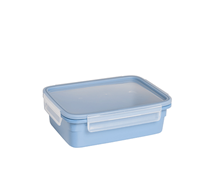
When using your food container in the microwave, heat the food at a lower temperature for a slightly longer time. This helps prevent the plastic from overheating. Fatty or oily foods can easily exceed the recommended temperatures.
Damaged product
If the product becomes damaged in any way that affects its function, take the packaging to your nearest recycling station so it can be given new life as another product.
Markings
Our products are marked with a recycling symbol indicating the material used, as well as a date clock showing when the product was manufactured. Suitable temperature ranges are also marked on the product.
We use the following material in our Products
PP – Polypropylene
Polypropylene is the most common type of plastic used in household products. It has high surface gloss and hardness, making it suitable for many applications.
Withstands temperatures from −40°C to +120°C and is dishwasher‑ and microwave‑safe.
PELD – Low‑Density Polyethylene (LDPE)
A soft and flexible material that, in its uncoloured state, is slightly milky and sometimes has a paraffin‑like surface. Highly impact‑resistant even at low temperatures. One of the most chemically resistant plastics and does not absorb odours. Floats in water.
Withstands temperatures between −40°C and +75°C and is dishwasher‑safe.
PEHD – High‑Density Polyethylene (HDPE)
A stiffer and harder plastic than LDPE, but with similar properties. It has better surface gloss and withstands higher temperatures.
Withstands temperatures between −40°C and +95°C and is dishwasher‑safe.
SAN – Styrene Acrylonitrile
A clear and impact‑resistant plastic with excellent transparency. Strong, scratch‑resistant, and chemically resistant.
Withstands temperatures from −40°C to +90°C and is dishwasher‑safe.
ABS – ABS Plastic
A very impact‑resistant and strong plastic with a high‑gloss surface. Combines the best properties of SAN plastic and impact‑resistant polystyrene. Cannot be manufactured as fully transparent.
Withstands temperatures from −40°C to +105°C and is dishwasher‑safe.
TPE – Thermoplastic Elastomer
TPE is a rubber‑like material that combines the properties of vulcanised rubber with the processing advantages of thermoplastics. The result is a flexible, durable, and recyclable material. It is particularly suitable for seals, such as those used in lids for food storage containers.
Withstands temperatures between −40°C and +75°C and is dishwasher‑ and microwave‑safe.